
NPCA researcher
PhD researcher
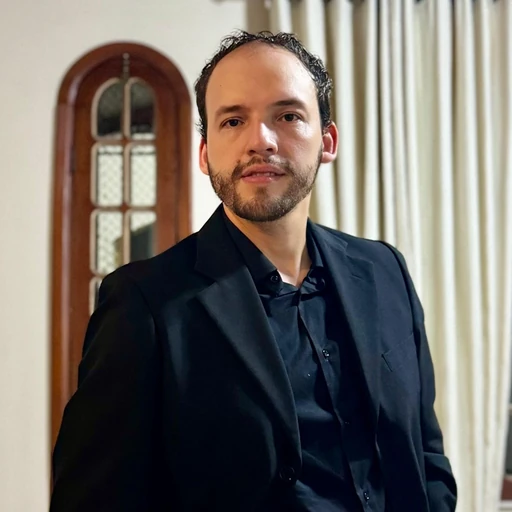
Daniel Leal Souza
Computational Intelligence
Biography
He holds a bachelor's degree in Computer Science from the Centro Universitário do Estado do Pará (CESUPA) (2007-2010), a master's degree in Computer Science from the Universidade Federal do Pará (2011-2014), and a doctorate in Electrical Engineering from the PPGEE at UFPA (Area of Concentration: Applied Computing - Subarea: Computational Intelligence). Currently, he is an Adjunct Professor at the Centro Universitário do Estado do Pará - CESUPA (Computer Science), a member of LCBIO/UFPA (Laboratory of Bio-inspired Computing), the Research Group on Evolutionary Algorithms at UFPA (Research Groups registered with CNPq), coordinator of the HAL and FEYNMAN research groups (CESUPA), and of the Research Center in Applied Computing at the Universidade Federal Rural da Amazônia (UFRA). Has experience in the areas of Computer Science, Computer Engineering and Information Systems, with emphasis on Computational Intelligence and Parallel and High-Performance Computing, mainly working on the following related topics: Programming Languages (Java, C/C++, CUDA-C, Python, Objective-C, Swift); Artificial Intelligence techniques applied to Engineering; Programming applied to AI (Pytorch, Pytorch Lightning, TensorFlow, Keras, Darts); Evolutionary Computation; Formal Languages and Automata; Compilers; Theory of Computation; Parallel Programming (OpenMP and CUDA standards for massive parallelism). In the field of Artificial Intelligence, working on the development of hybrid bio-inspired metaheuristics based on numerical optimization (e.g., Gauss-Newton, Levemberg-Marquardt), multi-population swarm intelligence (e.g., GA, PSO, ABC), evolutionary strategies based on Fuzzy Logic, Machine/Deep Learning, and mechanisms for convergence control. Currently working on the development of parallel and distributed optimization solutions based on natural and bio-inspired computing, with experience in parallel models of genetic algorithms, particle swarms, and bee colonies applied to engineering problems. In parallel, he is developing (in conjunction with the NPCA research group) a time series mapping system based on Recurrent Neural Networks (RNN) and applied to the epidemiological monitoring of COVID-19 in the state of Pará. He also has experience in software development with an emphasis on scientific and numerical computing, heterogeneous computing (with an emphasis on GPU Computing and FPGA programming), parallel numerical methods on GPUs (FDTD), parameter control based on Fuzzy logic applied to evolutionary computing, and optimization/hybridization/parallelization of learning algorithms in artificial neural networks. He works as a scientist in a Post-Doctoral project at CPGF - Postgraduate Program in Geophysics (UFPA): Application of Deep Learning tools in 1D Electromagnetic Inversion for Geonavigation in Well Logging During Drilling.